The Saguaro Cactus: Arizona's Iconic Desert Giant and How to Care for It

After spending years working in Southern Arizona landscapes, you develop an appreciation for things you might have overlooked when you first arrived in the desert. For me, the saguaro is one of those things. Every time I drive through Tucson and see a mature saguaro standing tall against the mountains, I am reminded of just how special our desert is. Some have been growing here for well over a century. They have weathered countless summers, monsoon storms, and changing seasons, yet they remain one of the most recognizable symbols of Arizona.
I have always believed that a beautiful landscape should complement its surroundings rather than compete with them. Here in Southern Arizona, we are fortunate to have some of the most interesting and resilient plants in the country. The saguaro is certainly one of them. Whether standing alone in its natural desert setting or serving as the centerpiece of a thoughtfully designed landscape, it has a character and presence that few other plants can match.
At Sonoran Oasis Landscaping, we believe that creating beautiful desert landscapes starts with understanding the plants that naturally belong here. And there is no better place to start than with Arizona's iconic saguaro cactus.
Why Do Saguaros Only Grow in Southern Arizona?
The saguaro (Carnegiea gigantea) is native to the Sonoran Desert, which spans Southern Arizona, southeastern California, and parts of northwestern Mexico. While it is often associated exclusively with Arizona, it actually grows naturally in several areas of the Sonoran Desert.
Its range is limited by climate. Saguaros need warm temperatures, relatively mild winters, and specific rainfall patterns. They are particularly sensitive to prolonged freezing temperatures, especially when young. The combination of summer monsoon rains, winter moisture, and desert temperatures makes Southern Arizona an ideal environment.
This is one reason saguaros are such an important part of the Tucson landscape. They are perfectly adapted to our unique desert conditions.
Fascinating Facts About the Saguaro
The saguaro is a slow-growing plant with an extraordinary lifespan and several interesting characteristics:
Long-lived: Saguaros can live approximately 150–200 years.
Slow-growing: A young saguaro may take 10 years or more to reach just a few inches in height.
Late bloomers: Saguaros typically begin producing flowers when they are around 35 years old.
Arizona's state flower: The saguaro blossom was designated Arizona's official state flower in 1931.
Water storage: Its pleated exterior expands to store water after rainfall.
Wildlife habitat: Birds such as Gila woodpeckers and gilded flickers excavate nesting cavities in saguaros. These cavities later provide shelter for other desert wildlife.
Arms take time: A saguaro may not develop its first arm until it is 50–75 years old, although this varies considerably.
These characteristics make the saguaro much more than an ornamental plant. It is an essential part of the Sonoran Desert ecosystem.
How to Care for a Saguaro Cactus
Although saguaros are adapted to desert conditions, they still benefit from proper placement and care.
1. Choose the Right Location
Saguaros need plenty of sunlight and room to grow. Consider their eventual height, width, and arm development before planting. Avoid locations near buildings, walls, overhead utilities, driveways, and areas where future growth could create conflicts.
2. Provide Excellent Drainage
Saguaros are susceptible to root problems when planted in poorly drained soil. Avoid low spots where water collects. Native desert soil can be suitable, but compacted or heavily amended planting areas may require professional evaluation.
3. Be Careful with Irrigation
Established saguaros are adapted to natural desert rainfall and generally do not need routine supplemental irrigation. Young or recently transplanted saguaros require specialized care. Watering should be based on the plant's condition, soil drainage, season, and establishment needs. Frequent watering can cause serious damage.
4. Avoid Unnecessary Pruning
Saguaros do not require routine trimming. Damaged or diseased plants should be evaluated by someone experienced with desert trees and cacti.
5. Protect Against Physical Damage
Lawn equipment, vehicles, construction, and careless maintenance practices can permanently damage a saguaro. Establish a protected area around the plant.
When Should You Use a Saguaro in Your Landscape?
A saguaro makes an excellent focal point in a Southwestern landscape. Its sculptural shape provides height, character, and a strong sense of place without taking up much ground space.
Consider incorporating a saguaro when:
Creating a focal point: A well-placed saguaro can anchor an entryway, courtyard, commercial property, or HOA common area.
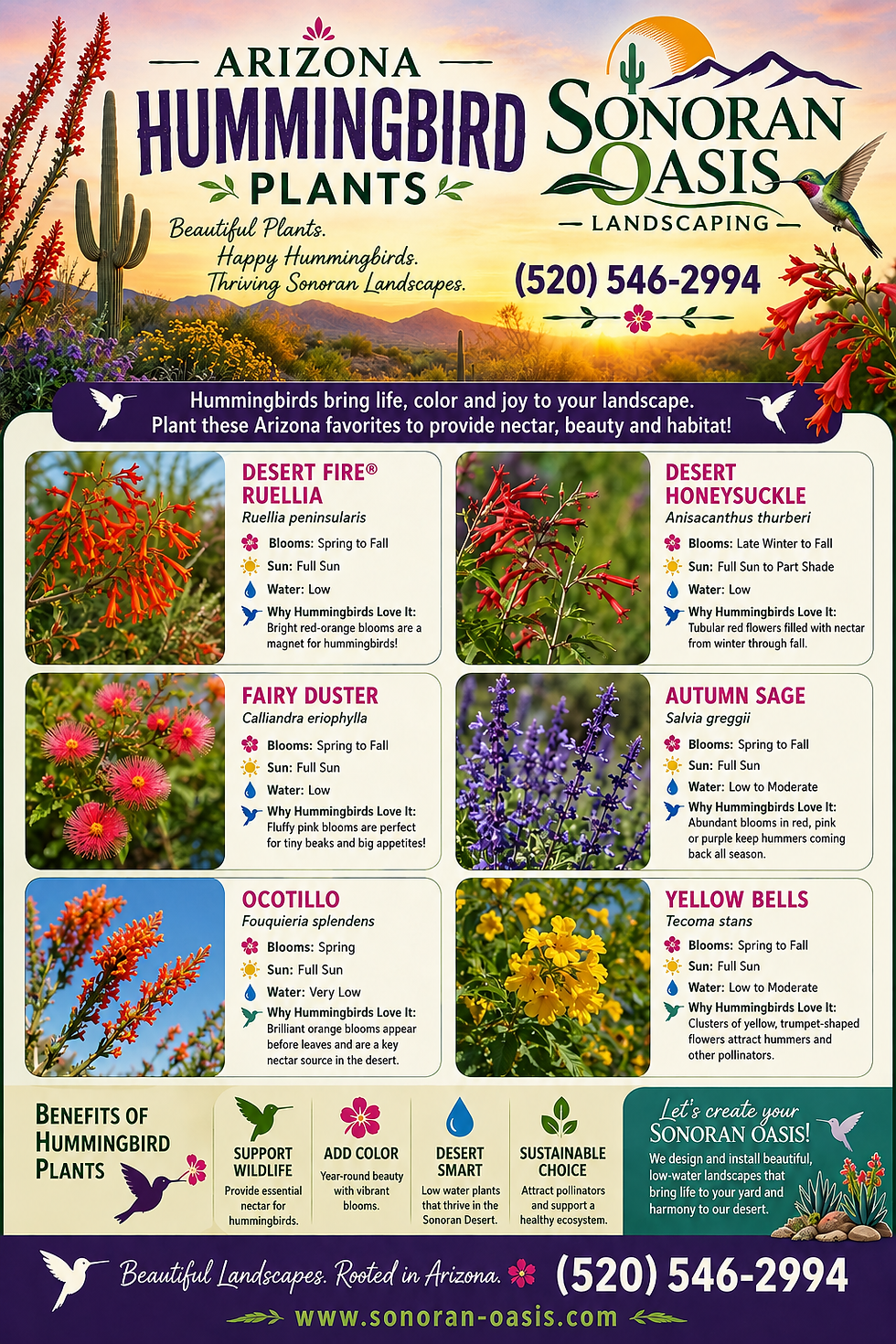
Designing a desert landscape: It pairs beautifully with palo verde, mesquite, ironwood, ocotillo, brittlebush, and native groundcovers.
Adding vertical interest: Its height provides contrast against lower-growing shrubs, flowering plants, and decorative rock.
Creating wildlife-friendly spaces: Its flowers and fruit provide food for native wildlife.
Reducing landscape water needs: Once established, saguaros require very little supplemental irrigation.
When designing around saguaros, consider their mature size, visibility, pedestrian access, and proximity to other plants. A thoughtfully designed landscape allows the saguaro to stand out without overcrowding it.
What Property Owners Should Know
Saguaros are protected under Arizona law. Property owners should never remove, relocate, or damage a saguaro without understanding the applicable regulations and obtaining any required permits. Moving a mature cactus is a specialized undertaking that should be handled by qualified professionals.
For HOAs and commercial properties, protecting existing saguaros is just as important as incorporating new ones. Irrigation changes, construction, vehicle traffic, and routine landscape maintenance can all affect their health.
A knowledgeable landscape maintenance team understands that preserving mature desert plants is just as important as keeping a property looking neat and attractive. Proper pruning, irrigation management, and routine landscape evaluations help protect these valuable features.
Let Sonoran Oasis Landscaping Help Your Desert Landscape Thrive
A beautiful desert landscape doesn't happen by accident. It takes an understanding of our native plants, proper irrigation practices, thoughtful plant selection, and consistent maintenance.
At Sonoran Oasis Landscaping, we bring more than 20 years of Southern Arizona landscaping experience to residential properties, HOAs, and commercial communities. Our services include:
Professional landscape maintenance and seasonal pruning
Irrigation inspections, troubleshooting, and repairs
Plant health evaluations and recommendations
Sustainable desert landscape design and installation
Water-conscious plant selection and landscape improvements
Whether your property already has mature saguaros or you are considering incorporating one into a new landscape, our team can help you make informed decisions that protect your investment and complement the natural beauty of the Sonoran Desert.
Ready to improve your desert landscape?
Contact Sonoran Oasis Landscaping to discuss your property's maintenance needs, irrigation concerns, or landscape improvement plans.
Visit www.sonoran-oasis.com or call (520) 546-2994 to get started.
Sonoran Oasis Landscaping — Professionalism. Excellence. Timeliness.
Author
Deborah Munoz-Chacon
ISA Certified Arborist
Owner, Sonoran Oasis Landscaping


Comments