When the Monsoon Hits: Protecting Your HOA Landscape from Storm Damage

One afternoon, your community landscape looks clean, maintained, and ready for summer. Then the monsoon rolls through. By the next morning, there may be an uprooted tree across a sidewalk, gravel washed into the street, weeds popping up everywhere, shrubs suddenly growing out of control, and retention basins holding water that should have drained away. For HOA managers and landscape committees, monsoon season can quickly turn routine maintenance into a list of unexpected repairs.
The good news is that much of the damage can be reduced with preparation and regular inspections.
Why Does Monsoon Damage Happen?
Monsoon storms bring a challenging combination of high winds, intense rainfall, and rapidly changing conditions. Storm damage often exposes problems that were already developing in the landscape.
Trees may uproot when soil becomes saturated and strong winds push against a heavy canopy. Dead or weak branches are especially vulnerable. Trees with poor structure, root damage, or too much weight at the ends of branches can also be more likely to fail during a storm. Proper pruning and regular inspections can help reduce the risk.
Heavy rain can also cause erosion, washing soil, gravel, and mulch out of landscape areas. Water moves quickly when drainage channels, swales, or basins are blocked with debris or sediment. Retention basins that have accumulated silt may no longer hold or allow water to percolate as intended.
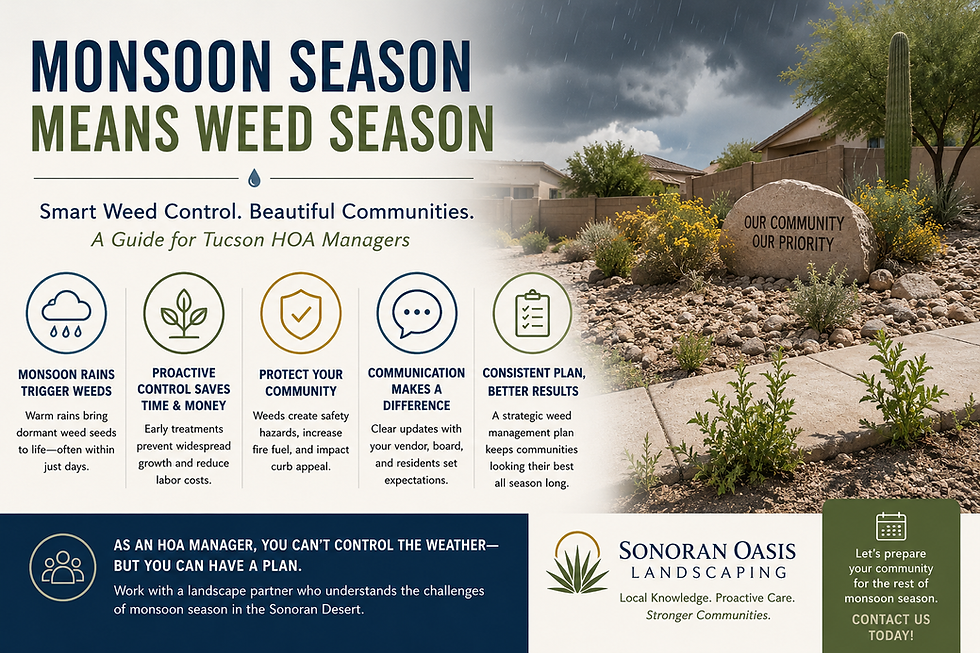
And then there are the weeds. Dormant weed seeds can respond quickly to moisture, making it seem like weeds appeared overnight. At the same time, established shrubs and other plants may experience rapid growth during the combination of heat, humidity, and rainfall.
How Can Your HOA Prepare?
Preparation should begin before damage occurs. Inspect large trees for deadwood, weak branches, and structural concerns. Avoid excessive pruning, but schedule appropriate thinning and pruning to help maintain healthy structure.
Walk the property and pay attention to areas where water collects or repeatedly washes away gravel. Check drainage paths, swales, and retention basins for sediment, weeds, trash, and other debris. After a storm, basins should be monitored to make sure water is draining and erosion is not developing.
What Should You Do After a Storm?
Prioritize safety first. Inspect common areas for fallen or leaning trees, broken branches, blocked sidewalks, damaged irrigation, and erosion that could create hazards. Document significant damage with photos before cleanup begins when possible.
Then assess what caused the problem. Simply replacing washed-out rock or removing a fallen branch may not prevent the same issue from happening again. Repeated erosion, standing water, or tree failures may indicate a larger drainage, irrigation, soil, or plant-structure issue.
Monsoon Landscaping Checklist
✓ Inspect trees for dead, broken, or hazardous branches.
✓ Look for leaning or uprooted trees and damaged shrubs.
✓ Remove storm debris from sidewalks, streets, and common areas.
✓ Check for irrigation damage or exposed drip lines.
✓ Inspect basins, swales, and drainage areas for sediment and debris.
✓ Watch for water that remains standing longer than expected.
✓ Repair erosion and replace washed-away soil, rock, or mulch.
✓ Monitor rapid weed growth and schedule additional control if needed.
✓ Identify shrubs that may need trimming due to accelerated growth.
✓ Document recurring problems for future maintenance or improvement.
Don't Wait for the Next Storm
Monsoon storms are part of life in Southern Arizona, but major landscape damage does not always have to be. A proactive maintenance plan, regular inspections, and prompt attention after each storm can help HOA boards protect their landscape investment, improve safety, and avoid turning the next storm into the same costly cleanup.
Is your community landscape ready for the next monsoon storm? Sonoran Oasis Landscaping can help HOA managers, landscape committees, and boards identify potential problem areas, assess storm damage, and develop practical solutions for trees, drainage, erosion, weeds, irrigation, and overall landscape maintenance. Contact us at (520) 546-2994 to schedule a property evaluation and help prepare your community before the next storm hits.
Author
Deborah Munoz-Chacon
Owner & ISA Certified Arborist
Sonoran Oasis Landscaping


Comments